
What to Bring to Rio Celeste: Complete Packing List
Trail shoes with grip, a rain shell, a refillable bottle and insect repellent. The Rio Celeste packing list we give guests, plus what to leave in the car.
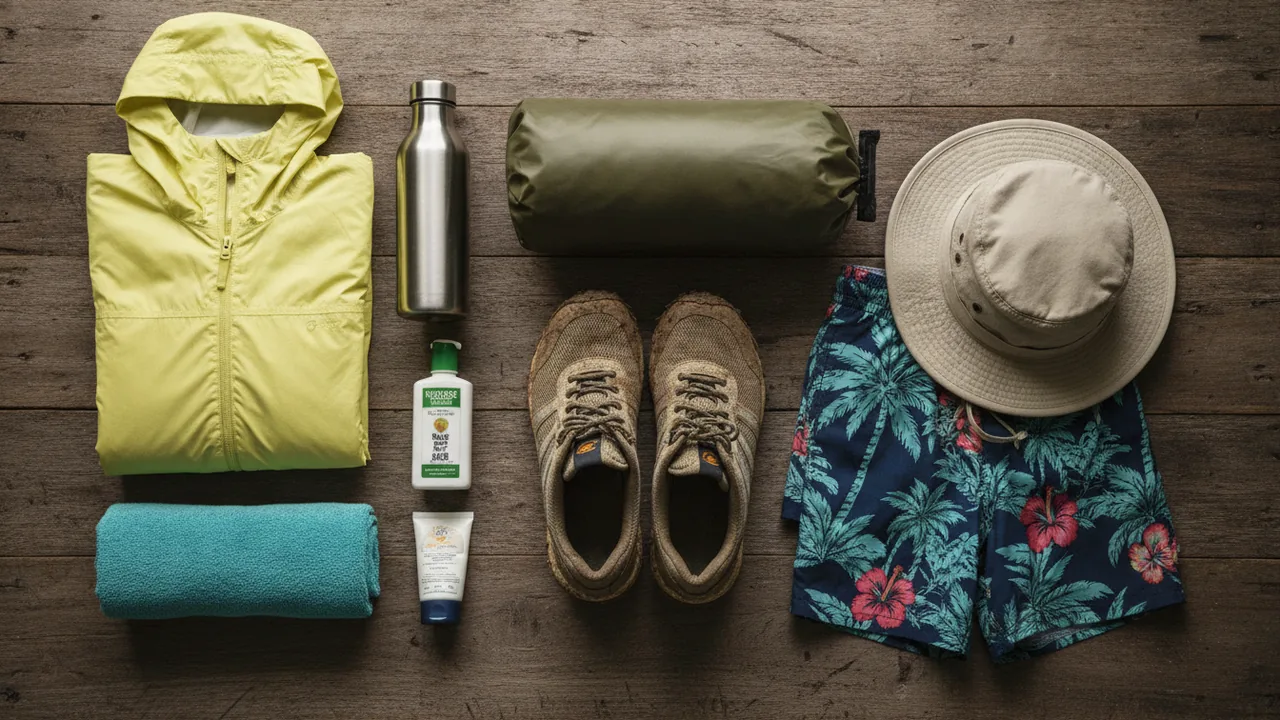
Río Celeste is a rainforest hike with a volcanic river at the end, in a country where it can rain hard in the middle of the dry season. Most packing mistakes here are not about gear you lack — they are about gear you brought that ruins the day, like smooth-soled sneakers on wet clay steps.
This is the list we give guests, sorted by how much it matters.
The five things that decide your day
1. Shoes with real tread — not sandals, not smooth sneakers
The park trail mixes concrete steps with packed dirt and boardwalk. Wet, that dirt becomes slick clay and the steps get greasy. Trail runners, hiking shoes or any sneaker with a deep lug pattern will do. Flip-flops and smooth-soled fashion sneakers are how people end up walking down the stairs sideways while holding a railing.
If you are tubing, bring a second pair of shoes or plan to go barefoot in the tube. Your hiking shoes will be soaked and muddy by the end, and putting them back on for the drive is unpleasant.
2. A rain layer you do not mind wrecking
A packable rain jacket or a cheap poncho. In the green season, rain is a question of when, not if. A poncho costs almost nothing and fits in a pocket, which is why guides carry them instead of expensive shells.
Skip umbrellas. The trail is narrow, the canopy drips long after the rain stops, and you need both hands on the railing at the waterfall steps.
3. Quick-dry clothing, not cotton
Shorts or light hiking pants in a synthetic or blend fabric, plus a breathable t-shirt. Cotton holds water, gets heavy and stays cold against your skin in an air-conditioned shuttle. One spare dry shirt in the car makes the drive back to La Fortuna or Bijagua far more comfortable.
Long pants are optional. Some visitors prefer them for insect protection; most people in the park wear shorts and are fine.
4. Water in a refillable bottle
The humidity is the part people underestimate. You will sweat more than the distance suggests, and the trail has no water station. Bring at least one liter per person, more if you are doing the full six-kilometer route to Los Teñideros.
Costa Rica discourages single-use plastics, and the park does not sell bottled water at the trailhead. Fill your bottle at the hotel.
5. Insect repellent and sunscreen
Mosquitoes are present year round and most active early and late. A repellent with picaridin or DEET works; apply it at the trailhead, not in the car. Sunscreen matters too, including on cloudy days — the ultraviolet load at this latitude is high and the canopy does not block all of it.
What to bring for the tubing tour specifically
Tubing is a different packing problem: you are going to be fully wet within the first minute, so everything you carry needs to survive that or stay in the vehicle.
- Swimsuit or quick-dry shorts and a rash guard. Worn under the life jacket.
- A dry bag or ziplock for your phone. If you want photos, protect the phone; the guide also shoots GoPro footage and shares it with the group.
- A towel and a full change of clothes left in the car at the meeting point.
- A strap for glasses or sunglasses. They come off in rapids, and the river keeps them.
- Nothing valuable. No jewelry, no loose cash, no drone.
Tubes, helmets, life jackets and the shuttle are provided on the Río Celeste Tubing Tour, so you are not carrying equipment. Bring water and a snack if you are the kind of person who gets hungry at hour two; we also provide bottled water and fresh fruit.
The supporting cast: useful, not essential
| Item | Why it earns its place |
|---|---|
| Small daypack (15–20 L) | Holds water, rain layer, snacks and phone. Bigger packs are unnecessary and hot. |
| Microfiber towel | Dries fast, weighs nothing, useful after the waterfall mist and after tubing. |
| Cash in colones or small dollar bills | For parking, snacks, tips and the occasional roadside stand. Cards do not always work in rural Guatuso. |
| Camera or phone with a strap | The waterfall viewpoint is the shot. A wrist strap prevents the classic disaster. |
| Snacks | There is no restaurant at the trailhead. Eat breakfast before you go. |
| Insect bite cream | Small tube. You will be glad at 9 p.m. |
| Copy of your park ticket | Digital is fine, but screenshots beat loading a PDF at the gate with one bar of signal. |
What not to bring
Drones are not allowed inside Costa Rica’s national parks. Neither is anything that disturbs wildlife — no speakers, no flash photography near animals. Food inside the park is generally discouraged and messy to manage on a trail; eat before, snack after.
Leave the big camera bag in the car if you are tubing. Leave the jewelry at the hotel. And leave behind the expectation that a waterproof phone case makes underwater photography a good idea in a river with rocks — it usually is not.
How to dress for the drive and the day
You will likely arrive from La Fortuna, Bijagua or Liberia, and the temperature at the park entrance is cooler and wetter than the coast. Dress in layers you can shed: a t-shirt, a light long-sleeve, and the rain shell. Avoid jeans — they are the worst possible fabric for this climate.
If you are driving yourself, read the car rental guide first. The last stretch of road to the park entrance has potholes that a small sedan handles slowly and a 4×4 handles without thinking about it.
The ten-minute pack, in order
If you are leaving in five minutes and need to stop reading:
- Trail shoes with tread, on your feet.
- Rain jacket or poncho in the bag.
- One liter of water per person.
- Insect repellent and sunscreen.
- Phone in a ziplock, cash in a pocket.
- Towel and dry clothes in the car.
That covers 95 percent of what people forget. Everything else is comfort, not function.
Frequently asked questions
Do I need hiking boots for Río Celeste?
No, but you need grip. Trail runners or sneakers with a deep tread are enough for the six-kilometer park trail. Sandals and smooth-soled shoes are the real problem, especially after rain.
Can I wear flip-flops on the tubing tour?
You can go barefoot in the tube, and many people do. Flip-flops tend to come off in the water. Wear shoes you do not mind losing or leave them in the shuttle.
Is there anywhere to change clothes or leave a bag?
At our meeting point in Calle Colonia Naranjeña there are restrooms and a parking area where you can leave a change of clothes in your vehicle. Inside the national park there are no lockers.
Do I need a rain jacket in the dry season?
Yes. December through April is drier, but rainforest rain happens in every month, and the canopy drips for hours after a shower. A packable shell weighs almost nothing.
What should I leave in the car?
Dry clothes, a towel, spare shoes, snacks and anything valuable. Take only water, a rain layer, your phone, your ticket and cash on the trail.
Packed and ready? Book the tour that fits
Gear sorted, the only decision left is which version of the river you want. The waterfall and the lagoon are inside the park; the part you can float is outside it.
Book the Hiking + Tubing + Lunch package for $85 and you use every item on this list in a single day — the trail in the morning, the river in the afternoon, lunch at the end. Traveling with kids or short on time? The two-hour tubing tour at $50 needs nothing more than a swimsuit and a towel. For the full picture before you go, read tubing vs hiking and whether you can swim in Río Celeste.
Keep reading
Tenorio Volcano Park Tickets & Hours 2026 (Río Celeste)
Tenorio Volcano National Park in 2026: US$13.56 adult entry, online-only tickets, 8 a.m. to 2 p.m. entry, 4 p.m. close.…
Río Celeste with Kids: What Works and What to Skip
Stairs, mud and no swimming inside the park: what Río Celeste is really like with children, which tour fits each age, an…
What Happens to Rio Celeste When It Rains? Full Guide
Heavy rain turns Rio Celeste from sky blue to muddy brown. Here is why it happens, how long the color takes to return, a…