
Can You Swim in Rio Celeste? The Rules and the Tours
Swimming is banned inside Tenorio Volcano National Park. Here is where you can still get into the blue water of Rio Celeste, and which tour to book today.
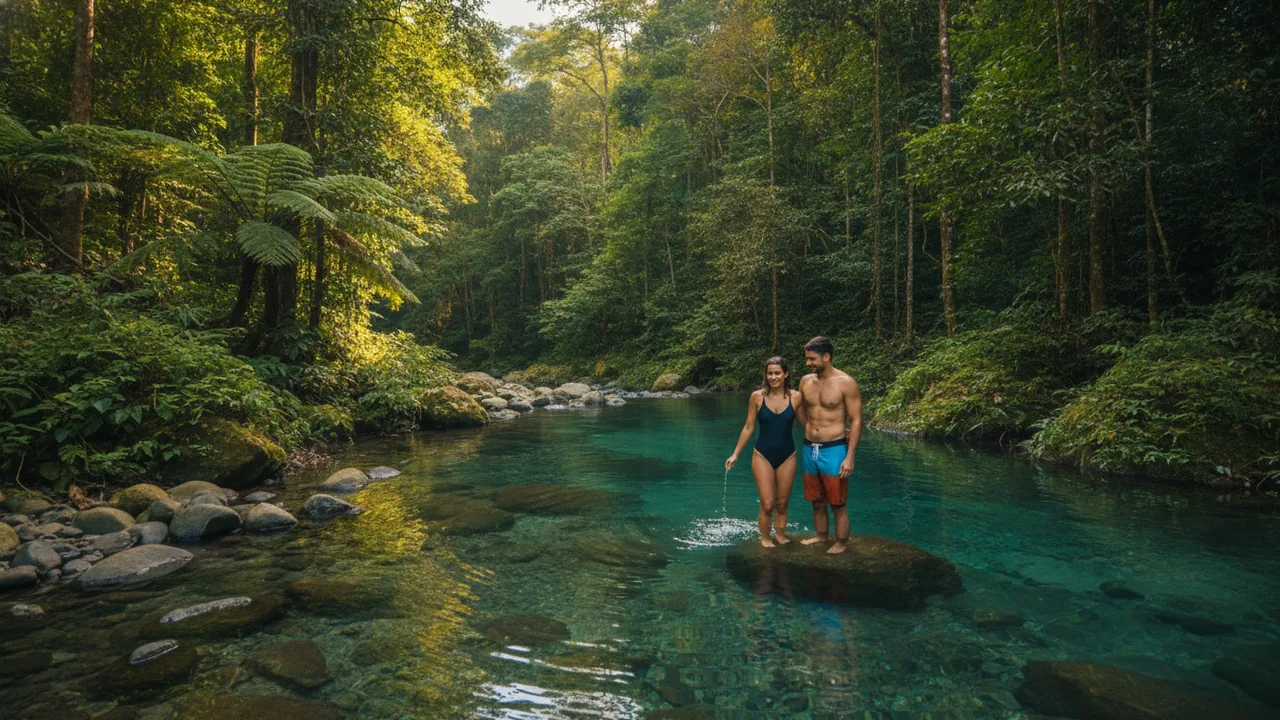
No. You cannot swim in Río Celeste inside Tenorio Volcano National Park. Swimming, wading and standing in the water are prohibited along the river within the park boundaries, including the Blue Lagoon and the pools above and below the waterfall. The rule comes from SINAC, Costa Rica’s national park service, and rangers enforce it.
That answer surprises a lot of visitors, because the water looks like a swimming pool that someone dyed on purpose. The good news is that you can still get into the blue river — just not there. Tubing tours run on a stretch of the same river outside the park, and that is how most travelers end up floating in Río Celeste instead of only photographing it.
Why swimming is banned inside the park
The prohibition is not arbitrary. The Blue Lagoon sits on a volcanic fault where gases and dissolved minerals reach the surface, and the water chemistry there is not the same as in a normal river. SINAC states plainly that visitors may not enter the water because of the high concentration of natural chemicals.
There is also the matter of the riverbed itself. The same aluminosilicate particles that give the water its sky-blue color settle as a soft, slippery clay. People who step in disturb a layer that took years to build, and the sediment clouds the water for everyone behind them.
What rangers actually enforce
Guides brief groups at the trailhead, and rangers patrol the viewpoints. Sitting on the rocks with your feet out of the water is fine. Stepping in, sitting on the edge of the lagoon, or climbing down to the base of the waterfall for a swim is not. If a ranger asks you to step back, step back — arguing is a quick way to end your visit early.
Where you can get in the water
The river continues past the park boundary, and outside the protected area the rules change. Local operators run tubing trips on the blue water downstream, with helmets, life jackets and a certified guide. That is the legal, organized way to be in Río Celeste rather than beside it.
Our Río Celeste Tubing Tour lasts about two hours and includes all the gear, a bilingual certified guide, bottled water, fresh fruit, GoPro photos of your run, parking and restrooms at the meeting point. You float through natural pools and gentle rapids, past volcanic clay formations, and you finish with a shuttle back to where you started.
Natural pools and roadside swimming holes
You will see cars parked at the side of the road near a few spots that locals use. Some are on private land, some charge a small entrance fee, and none of them have lifeguards or a guide watching the water level. They can be lovely on a calm, dry morning. They are also unregulated, and the river rises fast when it rains upstream, which is a genuine hazard in a drainage that starts on a volcano.
If your priority is blue water you can actually touch, book the organized version. The cost of a tube, a helmet and someone who reads the river professionally is small next to the risk of guessing.
Is the water safe?
For tubing, yes — on a guided trip, with a life jacket, at the water levels operators consider safe. Guides check conditions every morning and will reschedule or change the route when the river is high and brown after heavy rain. That decision is not about spoiling your day; a swollen volcanic river carries logs and moves much faster than it looks.
For drinking, no. Do not fill your bottle from the river. Bring your own water, and note that single-use plastic is discouraged across Costa Rica, so a refillable bottle is the practical choice.
The mineral content is another reason the park bans immersion. The blue color comes from colloidal aluminosilicate particles suspended in the water, formed where two clear rivers merge at a spot called Los Teñideros. It is a physical phenomenon, not paint and not magic, and it depends on those particles staying suspended and undisturbed.
What it feels like to float the blue river
Cool, not cold. The current does most of the work. You sit in the tube with your arms hooked over the sides, the guide positions the group, and the first set of small rapids spins you once before you get the hang of leaning back.
Between rapids the river slows into pools where you can look up at the canopy instead of downstream. That is the part people remember: thirty seconds of quiet green light and water so blue it looks edited, then another riffle and a splash of spray.
You do not need experience. You do need to be comfortable in moving water and able to follow simple instructions in English or Spanish. If you have back, neck or shoulder problems, or you are pregnant, ask before booking — the guide will tell you honestly whether the day’s conditions suit you.
Combining the park with the water
Most visitors want both: the waterfall and the float. That is a full day, and the logistics matter more than people expect because the park has fixed entry windows and the tubing schedule runs on river conditions.
The Hiking + Tubing + Lunch package covers both for $85, with the park entrance included, all tubing equipment, and a traditional casado lunch at the end. You walk the trail in the morning while the light is best, then spend the afternoon in the water.
If you only have half a day, pick one. Tubing alone is two hours and leaves you plenty of time to drive on to La Fortuna or Bijagua. The park hike is a three-hour, six-kilometer out-and-back walk that deserves its own morning — our Hiking Tour – Blue River Trails includes the entry ticket, a guide, water and snacks for $60.
Frequently asked questions
Can you swim at the Río Celeste waterfall?
No. The waterfall, the Blue Lagoon and the river inside Tenorio Volcano National Park are closed to swimming and wading. You can view them from the trail and the designated platforms.
Is there anywhere to swim in Río Celeste at all?
Yes, outside the park boundary. Guided tubing trips run on the blue river downstream, and a few local spots on private land allow swimming for a small fee. The guided option is the one with safety equipment and a trained operator watching the water.
Why is the water blue if swimming is banned?
The color has nothing to do with the swimming rule. Two clear rivers meet at Los Teñideros, and the resulting particles of aluminosilicate scatter sunlight so that mostly blue light reaches your eye. The park restricts entry to protect that water quality and the volcanic water chemistry.
Do I need to book the park ticket separately?
If you hire a hiking tour with us, the entry ticket is included. If you prefer to walk the trail on your own, you can buy the official digital ticket for $28 and receive the access code by email before you arrive.
Can children go tubing?
Many families do, but age and weight limits depend on the day’s water level. Message us on WhatsApp with the ages of your group before you book and we will tell you straight whether the tour is a good fit.
Book the version of Río Celeste you can actually touch
The waterfall is worth the hike. But if you came to Costa Rica hoping to be in that blue water, the tubing tour is the answer, and it runs on the same river a few kilometers downstream of the rangers’ boundary.
Book the Río Celeste Tubing Tour — $50, two hours, all gear and a certified guide included. Want the waterfall on the same day? The Tubing + Tenorio Park Ticket package is $70 and covers both. Read our guide to getting to Río Celeste from La Fortuna before you plan the drive.
Keep reading
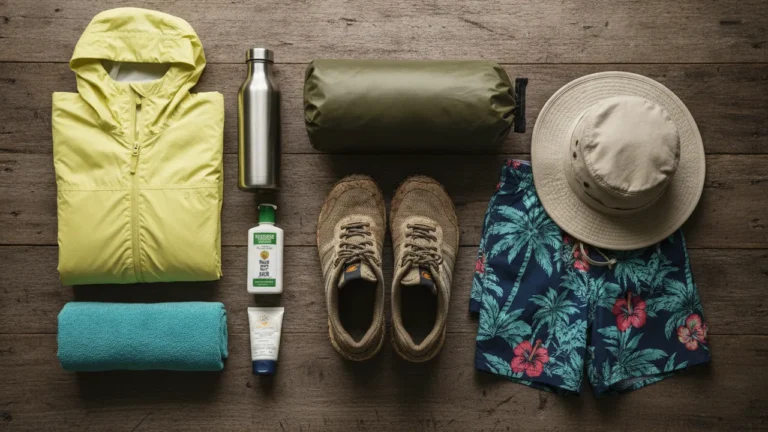
What to Bring to Rio Celeste: Complete Packing List
Trail shoes with grip, a rain shell, a refillable bottle and insect repellent. The Rio Celeste packing list we give gues…
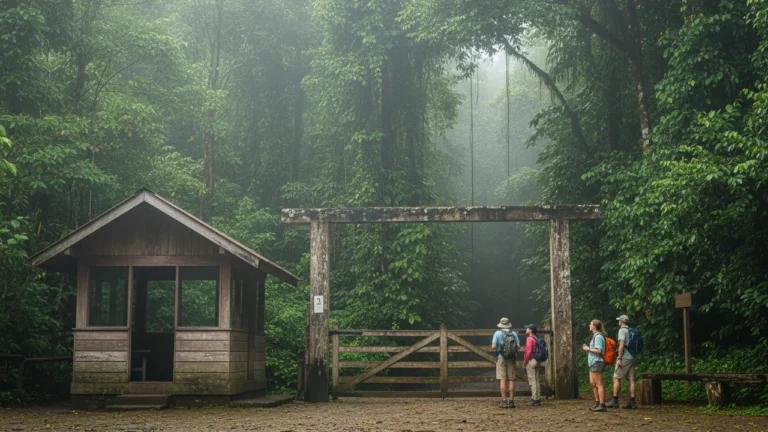
Tenorio Volcano Park Tickets & Hours 2026 (Río Celeste)
Tenorio Volcano National Park in 2026: US$13.56 adult entry, online-only tickets, 8 a.m. to 2 p.m. entry, 4 p.m. close.…
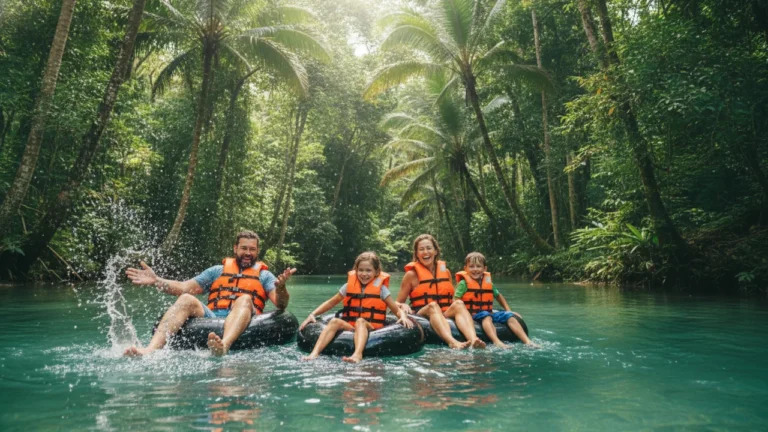
Río Celeste with Kids: What Works and What to Skip
Stairs, mud and no swimming inside the park: what Río Celeste is really like with children, which tour fits each age, an…