
What Happens to Rio Celeste When It Rains? Full Guide
Heavy rain turns Rio Celeste from sky blue to muddy brown. Here is why it happens, how long the color takes to return, and how to plan your trip around it.
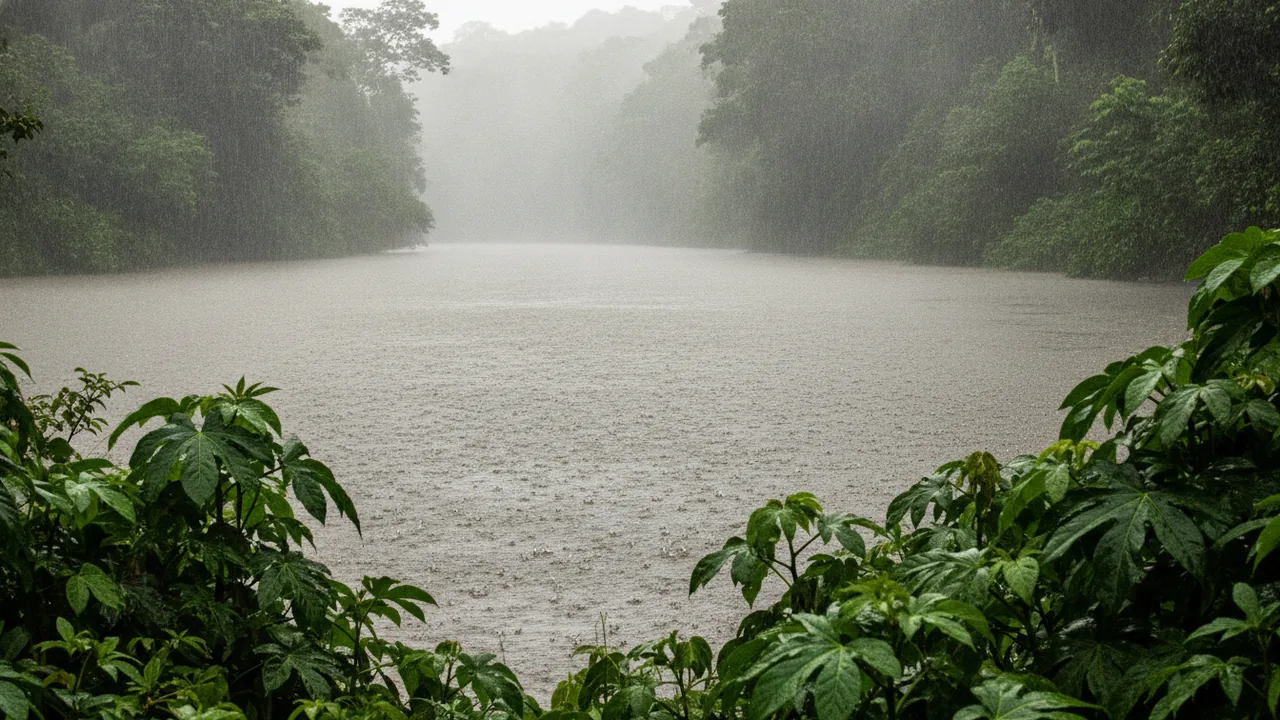
The rain does not just make the trail muddy. It changes the color of the river, and that is the thing nobody warns you about when you book a flight to Costa Rica for the green season.
Here is what actually happens, how long it lasts, and how to plan around it so you are not the person standing at the viewpoint telling everyone the photos were better online.
The short answer: the blue disappears for a while
Heavy rain upstream washes soil and volcanic sediment into the river. The water goes from sky blue to milky grey, then to the color of coffee with too much milk, and it can stay that way for hours or for a couple of days depending on how hard it fell and how saturated the slopes already were.
The blue is not pigment. It is a physical effect: tiny aluminosilicate particles suspended in the water scatter sunlight so that mostly the blue wavelengths reach your eye. Add a load of brown sediment and the effect is buried. The water is still clean enough for the ecosystem — it simply stops looking blue.
How the color works, and why rain breaks it
Two clear rivers, the Río Buena Vista and the Quebrada Agria, meet at a spot called Los Teñideros inside the park. The mix of their chemistry causes dissolved minerals to form colloidal particles of a very specific size. That size is what makes the scattering work.
Rain introduces two problems at once. First, suspended sediment of many different sizes, which scatters all wavelengths and gives you a muddy grey-brown. Second, less light: the color reads strongest in direct sun, and under a storm cell the river looks flat and dark even when the chemistry is intact.
So follow the sun
Even in the dry season, the river looks best between roughly 9 a.m. and 2 p.m., when the light comes in at a high angle. Early morning and late afternoon shots tend to look deeper and more teal than sky blue. If you are chasing the postcard color, plan your visit for the middle of the day and check the sky, not just the forecast percentage.
How long does it take to turn blue again
It depends on the storm. A short afternoon downpour on dry ground might cloud the river for two or three hours and leave it clear by the next morning. A multi-day event in September or October, when the ground is already soaked, can keep the water brown for 48 hours or more.
Local guides read this daily. If you are in the area for two or three nights, the odds are good that you get a clear morning at some point. If you have exactly one morning and it pours all night, you may see a brown river, and no tour operator on earth can fix that for you.
What rain does to the trail
The park trail is a mix of concrete steps, packed dirt and long sections of wooden boardwalk. In heavy rain the dirt turns to slick clay and the steps get greasy. It is walkable, but not in flip-flops, and not at the pace of a group in sneakers with smooth soles.
Expect the six-kilometer route to take longer than the posted three hours when it is wet. Expect to be passed by people in proper trail shoes. Expect the waterfall viewpoint to be crowded, because everyone stops there at once when it rains.
SINAC can close the trail or restrict access after severe weather, and it can close the park entirely on rare occasions. That is not something we control, and it is worth checking before you drive.
Does tubing still run in the rain
Sometimes yes, sometimes no, and the decision belongs to the guide on the water. Light rain is not a problem — you are going to be wet anyway. What matters is the river level and how much debris is moving.
After a big storm the river rises fast and carries branches. Guides cancel or reschedule on those days, and any operator who takes you out anyway is not one you want. Our Río Celeste Tubing Tour checks conditions each morning and will move your booking to another slot or day when the water is not safe.
There is a flip side worth knowing: on a normal rainy-season day with moderate flow, tubing is often more fun than in the dry season. More water means faster pools and livelier rapids, and the forest is louder and greener.
Green season versus dry season at Río Celeste
Costa Rica’s dry season runs roughly from December to April. The green season runs from May to November, with September and October typically the wettest months in this part of Guanacaste and Alajuela.
Green season is not a write-off. Storms here are often afternoon events, and mornings are frequently clear. The trade-off is straightforward: fewer crowds, lower hotel rates, lush forest, and a higher chance of a brown river on any given day.
A practical pattern that works
Arrive the afternoon before, sleep in Bijagua or near the park entrance, and take the first entry slot in the morning. You get the clearest sky of the day, the trail before the groups, and the whole afternoon free to reschedule if the river is off-color.
Two nights in the area turns a coin flip into a near certainty. One night, in the middle of a wet week, is a gamble.
What to do when the river is brown
This is where a lot of travelers waste a day sitting in a café being disappointed. The Tenorio area has plenty that rain does not ruin.
- Sloth & Wildlife Tour ($30). Sloths do not care about rain, and the wet forest brings out frogs, birds and insects. Our guided wildlife walk runs with a spotting scope and a naturalist guide.
- Coffee & Chocolate Tour ($35). Mostly under cover, and the smell of roasting cacao is a fine way to spend a wet morning. See the coffee and chocolate experience.
- Canopy Zipline ($45). You are going to get wet in the cloud forest regardless; the cables run in rain unless there is lightning. Details on the canopy tour page.
- Horseback Riding ($60). Muddy trails, happy horses, and a very different view of the countryside. See horseback riding in Río Celeste.
If you already have a park ticket and the water turns brown, the hike is still worth doing. The waterfall has volume, the forest is dramatic, and you will have the trail more or less to yourself.
Rain gear that actually helps
A cheap poncho beats an expensive jacket that stays in the car. Bring a dry bag or a ziplock for your phone, shoes with real tread, and a change of clothes in the vehicle. Avoid cotton — it holds water and gets cold.
For a fuller list, read what to bring to Río Celeste, and if you are driving yourself, our car rental guide covers the road conditions on the access route.
Frequently asked questions
Does Río Celeste still look blue when it rains?
Usually not while it is raining hard or in the hours right after. Sediment turns the water grey-brown and the blue scattering effect disappears. It comes back once the sediment settles, often the next morning.
Should I cancel my trip if the forecast says rain?
No. Tropical forecasts show a high chance of rain most days in the green season, and most of that falls in short afternoon storms. Plan your park visit for the morning and keep the afternoon flexible.
Is the park open in the rain?
The park generally operates in normal rain, with last entry in the early afternoon. SINAC can close trails or the whole park after severe weather, so confirm on the day you go.
Can I get a refund if the water is brown?
Weather is not a refundable event, and no operator guarantees the color of a river. What we do offer is flexibility: if conditions make the tour unsafe, we reschedule or refund according to our terms. If the water is merely off-color, the tour still runs.
When is the best month to see the blue color?
Late December through April gives you the highest odds, with February and March usually the driest. Clear mornings in the green season can be just as good — they are simply less predictable.
Book a morning slot and give yourself a backup day
The river decides the color, not the brochure. The smart play is an early start and a second morning in reserve.
Book the Hiking + Tubing + Lunch package for $85 and you get the waterfall in the morning while the light is good, the river in the afternoon, and a hot casado at the end — park entry and all tubing gear included.
Keep reading

What to Bring to Rio Celeste: Complete Packing List
Trail shoes with grip, a rain shell, a refillable bottle and insect repellent. The Rio Celeste packing list we give gues…
Tenorio Volcano Park Tickets & Hours 2026 (Río Celeste)
Tenorio Volcano National Park in 2026: US$13.56 adult entry, online-only tickets, 8 a.m. to 2 p.m. entry, 4 p.m. close.…

Río Celeste with Kids: What Works and What to Skip
Stairs, mud and no swimming inside the park: what Río Celeste is really like with children, which tour fits each age, an…