
Best Time of Day to Visit Río Celeste (2026 Guide)
Park gates open at 8 a.m. and last entry is 2 p.m. Here is the hour that gives you the bluest water, the fewest people and the most wildlife.
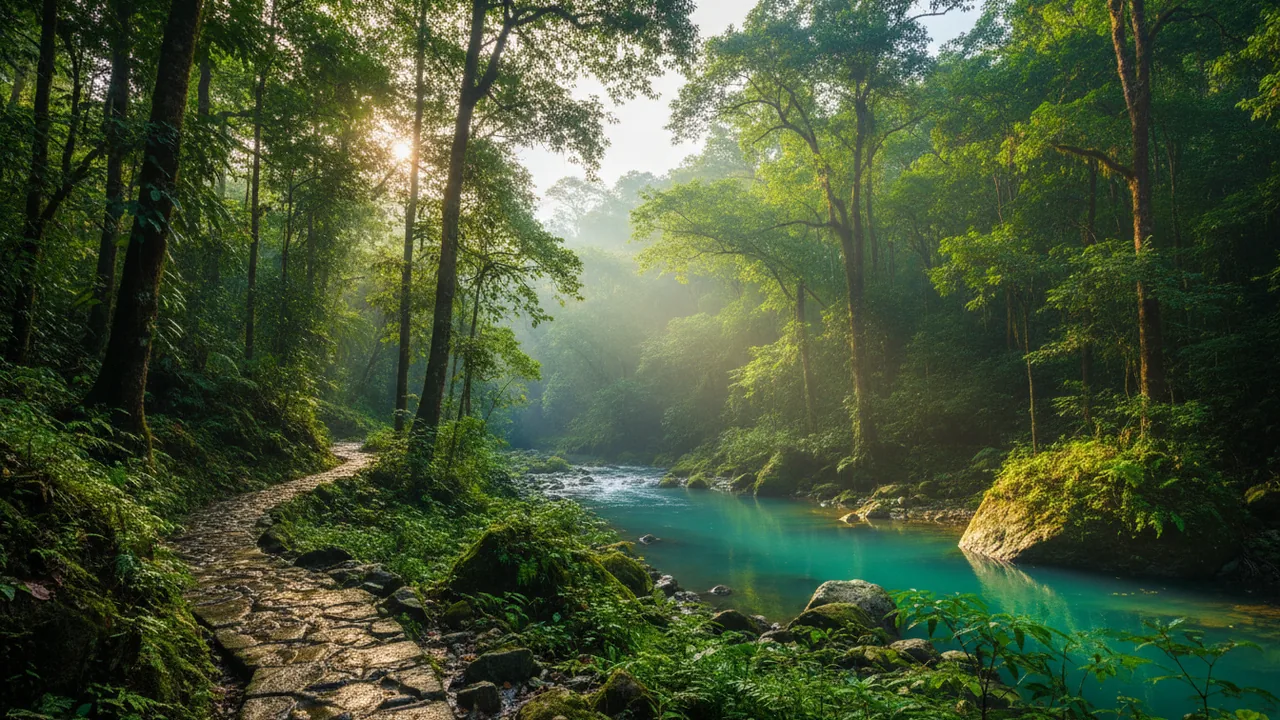
Río Celeste opens at 8:00 a.m. and stops letting people in at 2:00 p.m. Inside that six-hour window, the same trail can feel like two different places: an empty forest with mist on the water at eight, or a queue on the waterfall staircase by half past ten. The hour you choose also decides how blue the river looks, how much wildlife you actually see, and whether you have time for the full 6 to 7 km route or just the waterfall and back.
We run tubing trips on this river every day and we walk the park trail most weeks. This is the schedule we give friends when they ask.
The hours the park actually allows
Tenorio Volcano National Park is open daily from 8:00 a.m. to 4:00 p.m., with last entry at 2:00 p.m. Tickets are sold in time bands across that morning and early afternoon, and the park works with a daily quota of about 1,200 visitors, with roughly 500 people allowed on the trail at the same time. In practice that means three things:
- The 8:00 a.m. band is the only one that comfortably fits the full route to Los Teñideros and back without rushing.
- A 2:00 p.m. ticket is the last admission, not a starting time for a long hike. You still have to be out by 4:00.
- On holidays and weekends in the dry season, the quota can fill days ahead. Book online before you drive.
The three windows, ranked
8:00 to 9:30 a.m. — the window to aim for
The gate opens, the forest is still cool, and the wooden platforms at the waterfall are close to empty. Fog often sits in the canopy for the first hour, which softens the light and makes the blue of the water look deeper rather than washed out. Birds are moving, coatis are foraging beside the trail, and the mud has not yet been churned by a few hundred pairs of shoes.
You also get a buffer. The trail to the waterfall viewpoint is about 1.5 km from the El Pilón entrance, then a long staircase down. The full path to Los Teñideros, where the river turns blue, adds another stretch and brings the round trip to roughly 6 to 7 km, or 3 to 4 hours at an honest pace with stops. Starting at eight gives you that time and still leaves the afternoon free.
9:30 a.m. to noon — the group-tour window
Shuttles from La Fortuna start arriving around 9:30 a.m. The trail itself never feels crowded, but two places do: the staircase down to the waterfall and the mirador above it. If you arrive in this window, walk past the waterfall junction first and come back to it later, or accept a short wait for the photo spot.
Midday sun is the other issue. Between 11:00 and 1:00 the light is hard and vertical, which flattens the color of the water in photos and heats up the climb back from the staircase.
Noon to 2:00 p.m. — the gamble
Afternoon is when the rain most often builds in this part of Alajuela, and the ground is already wet from the morning. You can still have a good visit, especially if you only want the waterfall, but you will likely be walking out in rain and you will not have time for Teñideros, Laguna Azul and the Borbollones without hurrying. If this is your only slot, take rain gear and treat it as a waterfall visit rather than a full hike.
Why the hour changes the color of the river
The blue is not a pigment. Two clear streams meet at Los Teñideros and their different chemistry causes tiny aluminosilicate particles to clump together to a size that scatters blue light. That is why the color is strongest where the rivers join and why it can shift within a few hundred meters.
Two things affect how it looks on the day you visit: suspended sediment and light. A heavy overnight rain loads the river with sediment and turns it milky grey-brown for a day or two until it settles. Diffuse morning light, or the shade of the canyon at the waterfall, shows the turquoise far better than direct sun at noon. If you are visiting in green season, check the rainfall of the previous 24 hours rather than the forecast for the hour you plan to be there.
Wildlife is a morning business
Birds, coatis, agoutis and frogs are most active in the first two or three hours after opening. Sloths are in the trees all day, but they are easier to spot when they are moving and when a guide has time to scan slowly with a scope instead of keeping a group on schedule. If wildlife is the reason you came, 8:00 a.m. is not a suggestion.
If you are tubing, the clock is set for you
Tubing runs outside the national park boundary, which is why you can float this river at all: swimming inside the park is not allowed. Our departures leave at 8:00, 10:00, 12:00, 2:00 and 4:00, and each trip lasts about two hours with a certified bilingual guide, gear, fruit, water and GoPro footage included.
The 8:00 a.m. run is the quietest and the best for wildlife. The 10:00 a.m. run is the most popular. If you want both the park and the river in one day, the 8:00 a.m. tubing trip finishes around ten, and our base is 20 minutes from the park entrance, so you can still be inside before the 2:00 p.m. cutoff.
Three schedules that work
Hike early, tube after lunch
Enter the park at 8:00, walk to Teñideros, come back past Laguna Azul and the Borbollones, and be out by noon. Eat, then take the 2:00 p.m. tubing trip. This is the most comfortable version for families and photographers.
Tube at eight, hike at ten
Float first while the river is calm and the forest is loud with birds, then drive to El Pilón and enter the park around 10:30. You will hit the waterfall staircase when it is busiest, so do the far end of the trail first and come back to the falls last.
Day trip from La Fortuna or the coast
From La Fortuna it is about 45 km and 1 hour 15 minutes. From Liberia or the Guanacaste beaches, plan 1.5 to 2 hours each way. On a day trip, book the earliest slot you can realistically reach and do not add a second hike.
Day of the week and month matter too
Saturday and Sunday bring Costa Rican families, and the parking area at El Pilón fills earlier. Tuesday to Thursday is noticeably quieter. December to April is the driest and busiest stretch. May to November is greener, cheaper and emptier, and the mornings in that season are often clear even when the afternoon is not.
Frequently asked questions
Can I enter the park at 2:00 p.m.?
Yes, that is the last admission, but you must leave by 4:00 p.m. It is enough for the waterfall viewpoint and back, not for the full trail to Los Teñideros.
Is the park open every day?
Normally yes, from 8:00 a.m. to 4:00 p.m. Access can change at short notice because of weather, trail damage or volcanic activity, and sections of the waterfall staircase have been restricted in recent years. Confirm the current status the day before you go.
Do I need to buy tickets in advance?
It is strongly recommended. Entry is sold online in time bands with a daily cap, and the early bands are the first to go in high season.
When is the waterfall least crowded?
Before 9:30 a.m., and again after about 1:00 p.m., though the afternoon brings a higher chance of rain.
Morning or afternoon in the rainy season?
Morning, every time. The pattern in green season is usually clear early, wet later, and the trail is at its best before the first heavy shower.
Book your Río Celeste day
Our base at Calle Colonia Naranjeña in Guatuso is 20 minutes from the park entrance, which makes it easy to combine an early hike with a float on the same day. The tubing plus Tenorio park ticket combo covers both for $70 per person, with the official digital park entry included so you skip the ticket line. If you want the day handled end to end, the hiking, tubing and traditional lunch package is $85 and finishes with a casado. Just want the river? The two-hour tubing tour is $50.
Browse all departures and dates on our shop page. If you are still planning the drive, read how to get to Río Celeste from La Fortuna and how to rent a car in Costa Rica.
One last thing worth planning around: build in an extra hour. The trail is not technically hard, but roots, mud and humidity slow everyone down, and the visitors who enjoy Río Celeste most are the ones who are not checking the time.
Keep reading

What to Bring to Rio Celeste: Complete Packing List
Trail shoes with grip, a rain shell, a refillable bottle and insect repellent. The Rio Celeste packing list we give gues…
Tenorio Volcano Park Tickets & Hours 2026 (Río Celeste)
Tenorio Volcano National Park in 2026: US$13.56 adult entry, online-only tickets, 8 a.m. to 2 p.m. entry, 4 p.m. close.…

Río Celeste with Kids: What Works and What to Skip
Stairs, mud and no swimming inside the park: what Río Celeste is really like with children, which tour fits each age, an…